
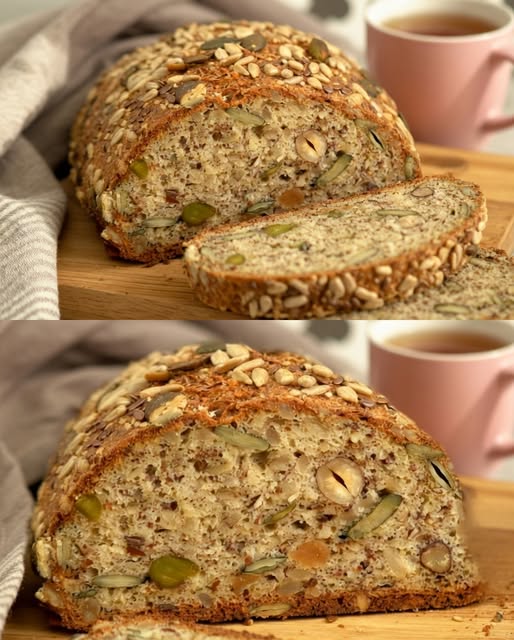
Step 1: Mix Quark and Eggs
In a large mixing bowl, combine 200 g of quark or Greek yogurt with 3 eggs. This mixture forms the base of your protein bread, providing moisture and binding the ingredients together.
 Pro tip: Use a whisk or electric mixer on low speed to ensure a smooth, lump-free consistency. The quark or yogurt adds a subtle tang while keeping the bread soft and light.
Step 2: Add Salt and Baking Soda
To the egg and yogurt mixture, add 1 tsp of salt and 2 tsp of baking soda.
Why it works: Baking soda reacts with the acidity of the yogurt to create lift, giving the bread a fluffy yet dense texture. Salt enhances all the flavors—don’t skip it!
 Note: If using apple cider vinegar (optional), add it now to boost the rising reaction.
Step 3: Incorporate Dry Ingredients
Add to the wet mixture:
100 g ground almonds
100 g mixed seeds
80–120 g mixed nuts (chopped if large)
30 g ground linseed (flaxseed)
Stir well until evenly distributed. These ingredients provide:
Texture and crunch from nuts and seeds
Healthy fats for sustained energy
Fiber and omega-3s for heart and gut health
Step 4: Add Psyllium Husks (The Secret Ingredient)
Gradually sprinkle in 16 g (2 tbsp) of psyllium husks while stirring continuously.
Why psyllium matters: It absorbs moisture and creates a gel-like binding effect—essential for achieving a bread-like texture without gluten. It also adds significant soluble fiber, which supports digestion and satiety.
 Stir thoroughly until the mixture thickens noticeably (about 1–2 minutes). It should hold together when pressed.
Step 5: Shape the Dough
Once thickened, shape the dough:
By hand: Form into a free-form loaf on parchment paper (rustic style)
In a pan: Press into a parchment-lined 9×5-inch loaf pan for uniform slices
Pro tip: Wet your hands slightly to prevent sticking. For extra crunch and visual appeal, press additional seeds onto the top before baking.
Step 6: Prepare for Baking
Line a baking sheet or loaf pan with parchment paper (not wax paper—it can stick).
Transfer the shaped dough to the prepared pan.
Smooth the top gently with a wet spatula if desired.
Step 7: Let It Rest (Don’t Skip!)
Allow the dough to rest for 20 minutes at room temperature.
Why this matters: Psyllium needs time to fully hydrate. This step ensures the bread sets properly and achieves the ideal texture—moist inside, crispy outside.
 While resting, preheat your oven to **180°C **(350°F).
Step 8: Bake to Golden Perfection
Place in the preheated oven.
Bake for 60 minutes with top and bottom heat (no fan/convection for best rise).
The bread is done when:
The top is deep golden brown
It sounds hollow when tapped on the bottom
A toothpick inserted in the center comes out clean
Pro tip: If the top browns too quickly, tent loosely with foil after 40 minutes.
Step 9: Cool Completely (Patience Pays Off!)
Remove from the oven and let the bread cool completely on a wire rack—at least 1–2 hours—before slicing.
Why cooling matters: Cutting while warm causes crumbling. As it cools, the structure sets, yielding clean, sturdy slices.
Storage tip: Once cooled, wrap tightly in parchment + foil, or store in an airtight container.
ADVERTISEMENT

