
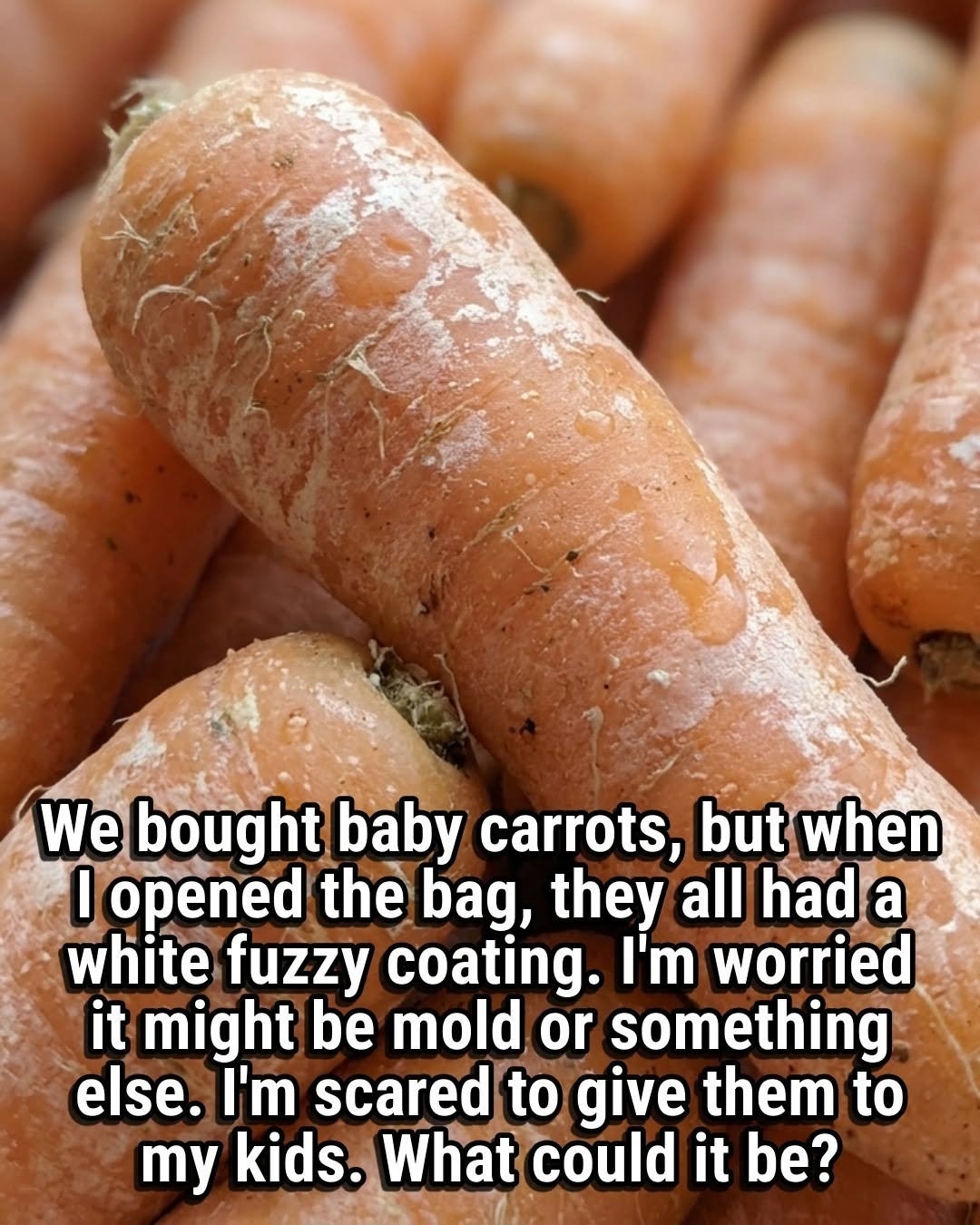
Let me give you a clear comparison.
Feature Carrot Blush (Safe) Mold (Unsafe)
Color White or pale gray Green, black, blue, dark gray
Texture Powdery, dry Fuzzy, slimy, or sticky
Smell No smell or normal carrot smell Musty, sour, or “off”
Can it be rinsed off? Yes, easily washes away No, may leave stains or residue
Does it spread? No, it’s on the surface only Yes, it spreads to other carrots
Is the carrot slimy? No Yes (often)
The bottom line: If the white coating rinses off easily and the carrot underneath is firm and bright orange, it’s carrot blush. Eat it.
If the coating is green, black, blue, or fuzzy, and the carrot feels slimy or smells bad—toss it.
How to Prevent Carrot Blush (Storage Tips)
Let me give you practical ways to keep your baby carrots fresher longer.
1. Keep Them Moist (But Not Wet)
Carrot blush is dehydration. The solution is to maintain moisture.
Store baby carrots in an airtight container (or keep the bag tightly sealed).
Add a damp paper towel to the container. The towel releases moisture, preventing the carrots from drying out.
Change the paper towel every few days to prevent mold.
2. Keep Them Cold
Carrots last longer in the refrigerator (32-40°F / 0-4°C). Don’t store them at room temperature.
3. Don’t Wash Until You’re Ready to Eat
Washing removes the protective moisture barrier. Wash baby carrots just before eating, not before storing.
4. Use Them Within 1-2 Weeks
Baby carrots are processed and peeled, so they don’t last as long as whole, unpeeled carrots. Plan to use them within 10-14 days.
5. Store Away from Ethylene-Producing Fruits
Fruits like apples, bananas, and pears release ethylene gas, which can cause vegetables to spoil faster. Keep carrots away from these fruits
see continuation on next page
ADVERTISEMENT

