
What About Full-Sized Carrots?
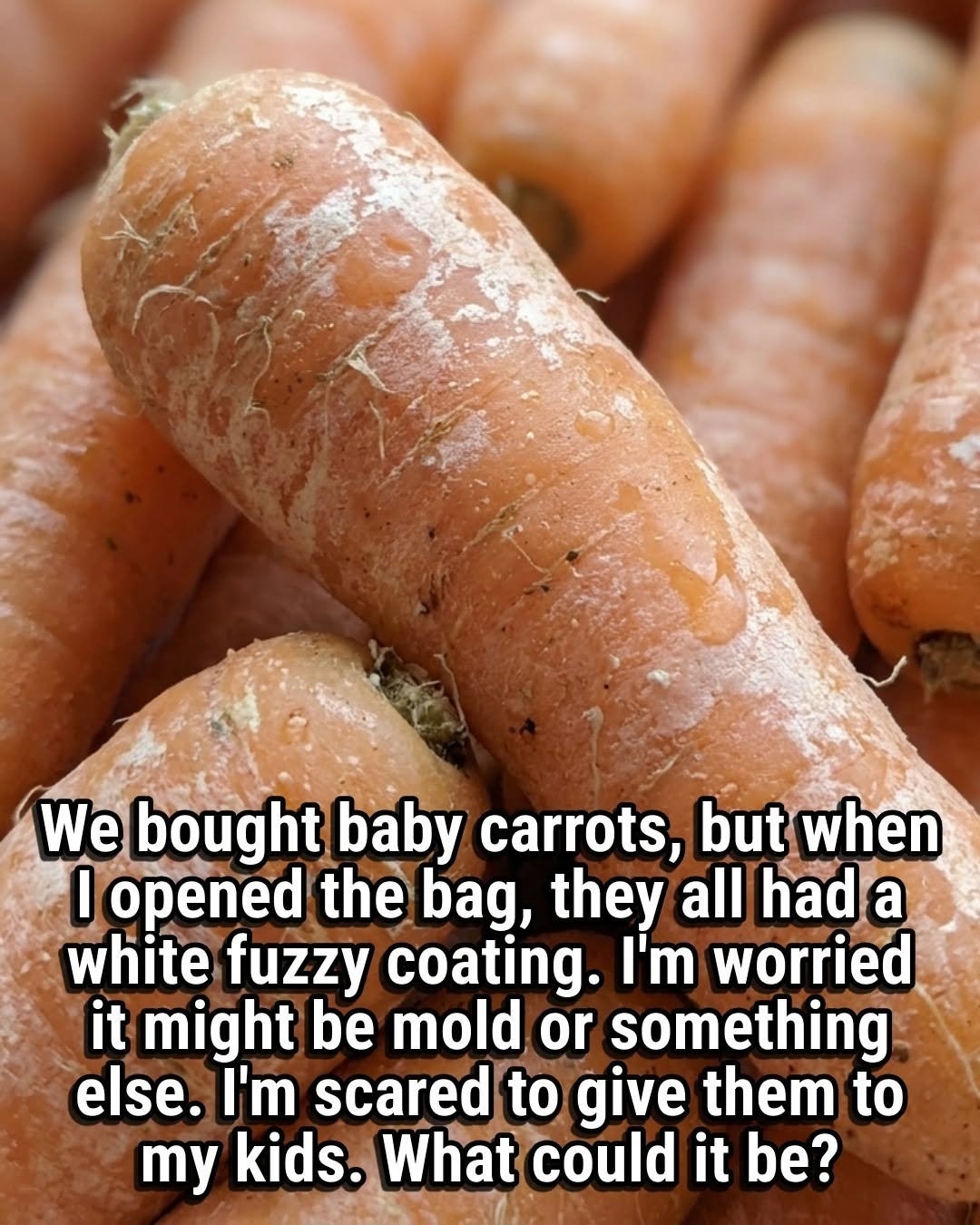
Full-sized, unpeeled carrots are less prone to white blush because they still have their protective skin. However, once you peel them, they will also develop white blush if stored exposed to air.
For full-sized carrots:
Store them in the refrigerator in a sealed bag or container.
Keep them unpeeled until ready to use.
If they do develop white blush after peeling, rinse them—they’re still fine.
When to Actually Toss Your Carrots (Red Flags)
Let me be clear about when carrots are truly spoiled.
Toss them if:
They are slimy or sticky to the touch.
They have a strong, unpleasant odor (sour, musty, or rotting).
They have visible mold (green, black, blue, or dark gray).
They are soft, mushy, or wrinkled (beyond just the surface).
They have dark spots or lesions.
Carrots that are still safe to eat:
White or pale gray coating (carrot blush)
Slightly bendy but not mushy
Small cracks or splits
Hairy roots (these are normal root hairs, not mold)
see continuation on next page
ADVERTISEMENT

