
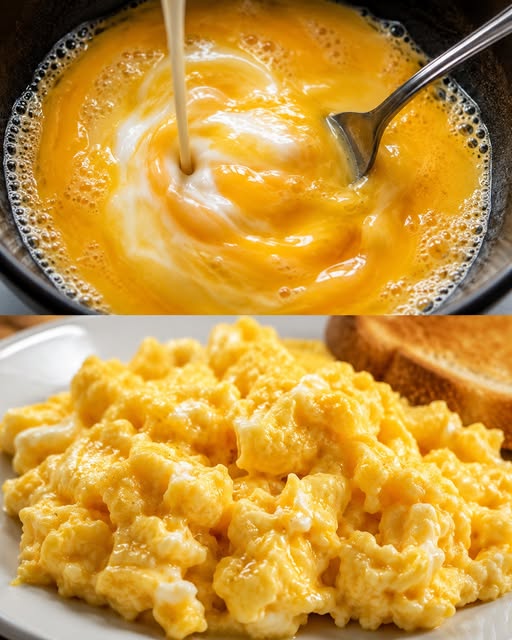
 FAQs: Your Scrambled Egg Questions, Answered
Q: Should I add milk or cream to scrambled eggs?
A: It’s optional. A tiny splash of cream can add richness and help prevent overcooking, but it’s not necessary for perfect eggs. Many chefs skip dairy entirely. If you use it, add just 1 tsp per egg at the end of cooking.
Q: How do I keep scrambled eggs warm for a crowd?
A: Transfer cooked eggs to a warm bowl, cover loosely with foil, and place over a pan of barely simmering water (a makeshift double boiler). Stir gently every few minutes. Don’t hold longer than 15–20 minutes, or they’ll dry out.
Q: Can I make scrambled eggs ahead of time?
A: Not ideally. Scrambled eggs are best served immediately. If you must prep ahead, undercook slightly, cool quickly, and reheat gently in a pan with a tiny bit of butter over low heat.
Q: Why do my scrambled eggs turn gray or green?
A: This is a harmless reaction between sulfur in the egg whites and iron in the yolks, accelerated by overcooking or high heat. It doesn’t affect safety or flavor significantly, but to prevent it: cook low and slow, and don’t overcook.
Q: Can I use olive oil instead of butter?
A: Yes, but butter adds flavor and helps control heat better. If using olive oil, choose a mild one and keep heat low to avoid burning.
Q: How many eggs per person?
A: 2–3 large eggs per adult is standard. Adjust based on appetite and what else you’re serving.
Q: What’s the best way to reheat leftover scrambled eggs?
A: Gently in a non-stick pan over low heat with a tiny pat of butter, stirring frequently. Microwave reheating often makes eggs rubbery—if you must, use 50% power in short bursts.
 A Compassionate Reminder
If your scrambled eggs have historically been dry, rubbery, or disappointing—please know: You’re not a bad cook. You just hadn’t learned the method yet.
Cooking is a skill, not a talent. And scrambled eggs, for all their simplicity, are surprisingly easy to get wrong and wonderfully rewarding to get right.
So be patient with yourself. Try the low-heat method. Embrace the gentle stir. And if your first attempt isn’t perfect? That’s okay. Eggs are forgiving. Breakfast will come again tomorrow.
What matters isn’t perfection. It’s the willingness to try, to learn, and to share something warm and nourishing with the people you love.
 The Bottom Line
Perfect scrambled eggs aren’t about fancy ingredients or complicated techniques.
Remember:
 Low heat is non-negotiable—patience pays off
 Gentle stirring creates soft curds; aggressive stirring makes rubber
 Remove eggs just before they look “done”—carryover heat finishes them
 Butter isn’t just flavor—it’s a tool for temperature control and texture
Progress, not perfection: Every batch teaches you something
The next time you crack eggs into a bowl, remember: you’re not just making breakfast. You’re practicing a small act of care—for yourself, for your loved ones, for the quiet joy of a meal made with attention.
So turn the heat down. Slow your hand. And let the eggs become what they were meant to be: soft, silky, and deeply satisfying.
Your perfect scramble is waiting.

