
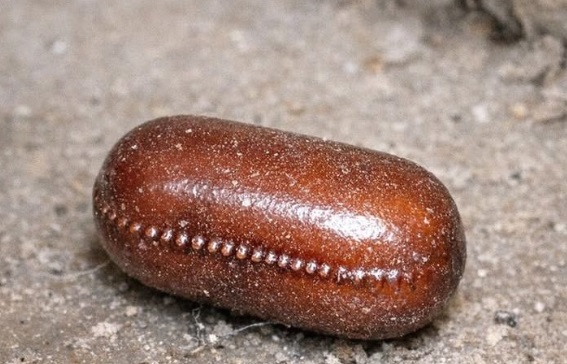
Finding an unusual object behind a kitchen cabinet can be a bit of a shock. If you have spotted a “small, hard, brown pill-shaped object” that features a “weird ridge on the side” and “looks like a dried bean,” you are likely looking at a cockroach egg case, also known as an ootheca.
While it might look harmless, this tiny capsule is a significant find for any homeowner. Understanding what it is and how to manage it is the best way to keep your living space clean and healthy.
1. Why Finding This “Dried Bean” Is Important
Discovering a cockroach egg case is more than just a minor cleaning issue; it is often a sign that pests have moved in and are starting to reproduce. Because these cases are designed to protect the eggs from the outside world, they are very sturdy.
A single ootheca can hold a large number of future cockroaches. Depending on the specific type of cockroach, one case could contain anywhere from 10 to 50 eggs. If these are allowed to hatch, a small problem can quickly turn into a much larger one. Addressing the issue early helps protect your home from the bacteria and allergens that these pests are known to carry.
2. Identifying the Ootheca: Appearance and Texture
To the untrained eye, an ootheca can easily be mistaken for a seed or a bean. However, there are specific physical traits to look for:
- Shape: They are generally oblong or pill-shaped.
- Color: The color usually ranges from a light tan to a very dark, reddish-brown.
- Texture: The exterior is hard and leathery. This shell is a protective barrier that keeps the eggs safe from predators and even some household cleaners.
- Size: Most measure between 5 and 9 millimeters in length.
3. The Mystery of the Side Ridge
One of the most identifying features of a cockroach egg case is the “strange ridge along the side.” This ridge is actually a specialized seam. When the young cockroaches (nymphs) are fully developed and ready to enter the world, the case splits open right along this line. If you see a case where the ridge looks like it has been pried open, the eggs have likely already hatched. If it is sealed tight, the eggs are probably still inside.
4. Where These Egg Cases Are Usually Hidden
Read more on the next page
ADVERTISEMENT
ADVERTISEMENT

