
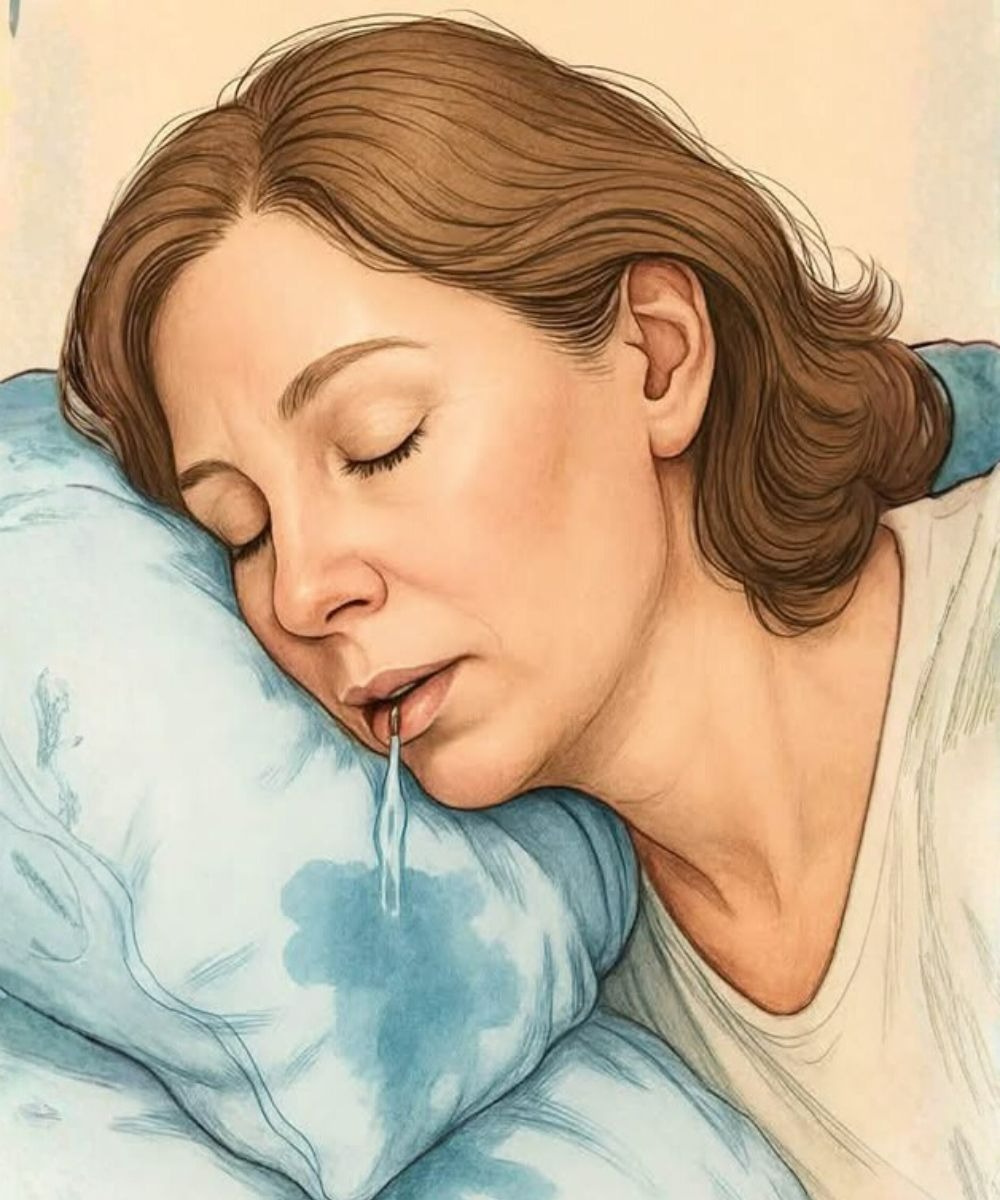
You wake up groggy.
Reach up to wipe your face…
And notice your pillow is damp — again.
Nighttime drooling — medically known as sialorrhea during sleep — is more common than you think.
And while it might feel embarrassing, it’s usually harmless.
Yes, your sleep position is the #1 culprit.
But could your mind play a role too?
Let’s explore what science says about why pillows get wet at night — so you can respond wisely, not worry endlessly.
Because real wellness isn’t about perfection.
It’s about understanding your body — even in its quietest habits.
🔍 Why Do We Drool During Sleep?
Saliva helps with digestion, oral hygiene, and swallowing — but when we’re awake, we swallow reflexively, keeping things dry.
At night?
👉 That reflex slows down — especially in deep sleep.
If you’re lying on your side or stomach, gravity pulls saliva toward the pillow instead of the throat.
💡 Occasional drooling = normal.
Frequent soaking = worth investigating.
✅ Common Physical Causes of a Wet Pillow
1. Sleeping on Your Side or Stomach
Gravity opens the mouth slightly → saliva leaks out
Most common cause — especially if only one side of the pillow is wet
✅ Fix: Try sleeping on your back with a supportive pillow to keep airways open and jaw closed.
2. Nasal Congestion or Breathing Issues
Allergies, colds, deviated septum, or sleep apnea force mouth breathing
Dry mouth leads to increased salivation as a protective response
🩺 If you snore or wake up gasping, talk to a doctor about possible obstructive sleep apnea (OSA).
3. Acid Reflux (GERD)
Stomach acid rising at night irritates the esophagus
Triggers excess saliva production (“water brash”) to neutralize acid
📌 Often comes with heartburn, bitter taste, or chronic cough.
4. Medications & Supplements
Some drugs increase saliva production or relax facial muscles:
Antipsychotics
Certain antidepressants
Seizure medications
Cholinesterase inhibitors (used in dementia)
💊 Always consult your doctor before changing meds.
5. Dental Issues
Ill-fitting retainers, braces, or dentures
Gum disease or tooth infections
TMJ disorder (jaw misalignment)
🦷 See a dentist if drooling started after dental work.
🧠 Could Mental Health Play a Role?
✅
Stress & Anxiety
Can disrupt sleep quality → lighter, fragmented sleep where swallowing reflex is less active
✅
Poor Sleep Hygiene
Late-night screen use, irregular schedule → affects muscle control and breathing patterns
✅
Depression
Some cases linked to altered sleep architecture and medication side effects
✅
Bruxism (Teeth Grinding)
Often tied to stress; jaw tension can affect mouth closure during sleep
❌ Debunking the Myths
❌ “Excessive drooling means I’m repressing emotions”
No scientific basis — this is pseudoscience
❌ “Only lazy people drool at night”
False — even athletes do, depending on position
❌ “It’s a sign of serious brain disease”
Rarely — unless paired with slurred speech, facial weakness, or difficulty swallowing
❌ “Changing my thoughts will stop drooling”
Overstates psychology — posture and anatomy matter more
✅ What You Can Do: Practical Solutions
NEXT PAGE
ADVERTISEMENT

