
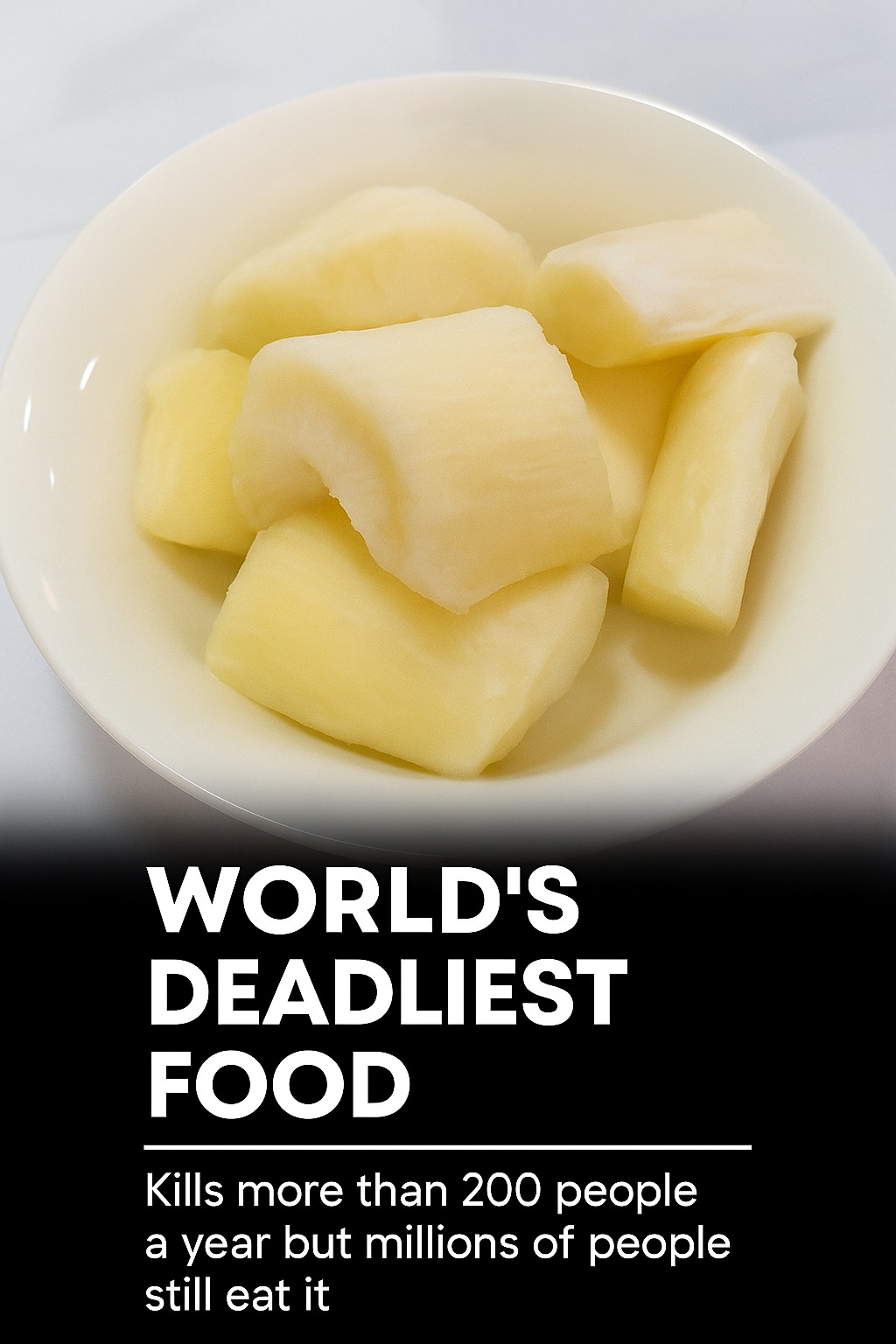
It is a paradox of global nutrition: a humble, starchy root that provides sustenance to nearly 500 million people across Africa, South America, and the Caribbean, yet carries the grim moniker of “the world’s deadliest food.”Groceries
That food is cassava (also known as yuca). Every year, improper preparation leads to the tragic deaths of over 200 people, while thousands more are left with permanent neurological damage or paralysis. This food is a cornerstone of economic and nutritional survival, but the stakes for safe consumption are dangerously high.
How can a single, essential crop be simultaneously life-giving and toxic? The answer lies in its chemistry and the conditions under which it is often consumed.
What is Cassava?
Cassava is a resilient, drought-resistant tuber, native to South America, prized for its high carbohydrate content, making it a critical calorie source in tropical regions. It is the base ingredient for many global staples, including tapioca pearls, garri, and fufu.
Sweet Cassava: Contains naturally lower levels of toxins and is generally safer with basic cooking.
Bitter Cassava: Contains dangerously high concentrations of cyanogenic glycosides.
The Core Danger: Cyanide
The danger is the presence of a compound called linamarin. When the cassava plant cells are damaged (through peeling, grating, or chewing), linamarin converts into a potent toxin: hydrogen cyanide.
According to the World Health Organization, cassava is responsible for more cases of food-related cyanide poisoning globally than any other crop.
Consequences of Cyanide Poisoning:
Acute Poisoning Rapid onset of nausea, dizziness, rapid breathing, convulsions, and potentially death within hours.
Konzo A severe, sudden, and permanent neurological disorder causing paralysis in the legs. Primarily affects malnourished people in Central Africa.
Tropical Ataxic Neuropathy A chronic condition that develops over time, causing blindness, deafness, and a progressive loss of coordination.
Survival Harvesting: Drought or famine forces communities to harvest the crop prematurely, when cyanide levels are at their peak.
Resource Scarcity: Poverty and food insecurity mean people are heavily reliant on cassava and lack the resources (like abundant water or time) needed for proper detoxification.
Bypassing Tradition: Traditional detox methods—which require several days of soaking, drying, and cooking—are skipped due to desperation or urgency.
In essence, the food that offers the highest chance of survival in a crisis is the most dangerous when time, water, or knowledge is scarce.
III. The Path to Safety: Traditional Detoxification
The good news is that traditional, time-tested methods are remarkably effective at rendering cassava completely safe and nutritious. When prepared correctly, cassava provides energy, fiber, calcium, and B vitamins.
The Essential Safety Protocol:
Peel Thoroughly: The highest concentration of toxins resides in the skin.
Soak (1-3 Days): Submerging the cassava in water encourages fermentation, which breaks down the toxic cyanide compounds.
Grate and Squeeze: Grating the root and pressing out the liquid removes the majority of the remaining toxic water.
Dry: Spreading the cassava out in the sun further reduces moisture and evaporates residual toxins.
Cook Completely: Thorough boiling, roasting, or frying neutralizes any cyanide compounds still remaining in the starch.
IV. A Symbol of Resilience and Vulnerability
Despite the risks, cassava remains indispensable because its agronomic qualities are unmatched in fragile environments:
Resilience: It thrives in poor soils and harsh, drought-prone climates where other, more fragile food crops simply fail.
Storage: The root can be left in the ground for months, serving as a critical famine reserve that can be harvested as needed.
Cost-Effectiveness: It is high-yielding and low-cost, making it the most accessible calorie source for millions.
Cassava stands as a powerful symbol of contradiction: a food of cultural significance and economic importance that constantly reminds the world of the high stakes involved in food security.
Global efforts are underway—from breeding safer, low-cyanide varieties to promoting industrial processing and educating communities—to ensure this life-giving crop never becomes a threat. The tragedy is not that people eat cassava, but that many are too vulnerable to prepare it safely.
ADVERTISEMENT

