
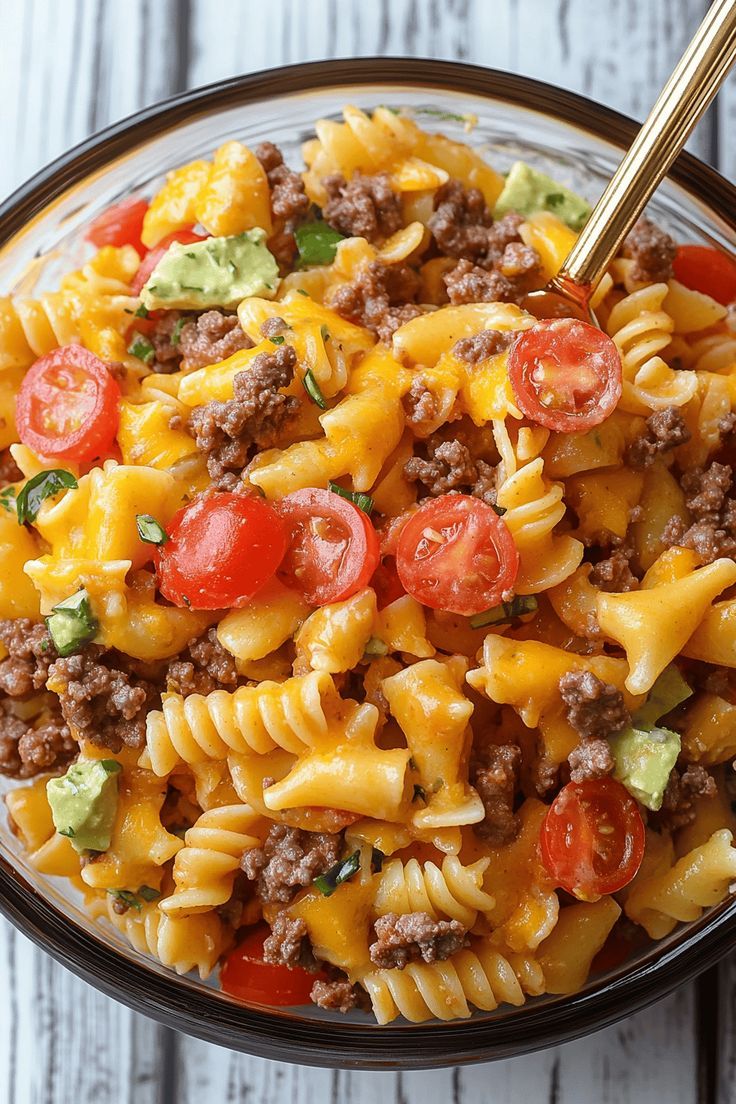
Step-by-Step Instructions
Step 1: Prepare the Pasta Foundation
Cook pasta according to package instructions until al dente, typically 8-12 minutes. Remember to salt the water generously—it should taste like the ocean. This is your only opportunity to season the pasta itself. Drain immediately and rinse under cold water to stop the cooking process. Toss with a teaspoon of olive oil to prevent sticking and set aside to cool completely.
Step 2: Season and Cook the Protein
Brown your ground meat in a large skillet over medium-high heat until no pink remains (approximately 7-8 minutes). If using plant-based protein, follow package instructions as cooking times may vary. Drain excess fat, then add taco seasoning and 1/3 cup water. Simmer for 3-4 minutes until the liquid reduces and the meat is thoroughly coated. Transfer to a plate and refrigerate for 15 minutes to cool.
Step 3: Prepare the Fresh Components
While the pasta and meat cool, chop all vegetables to similar sizes for consistent texture in every bite. Pro tip: If meal prepping for the week, consider storing water-rich vegetables (tomatoes, avocados) separately to maintain optimal freshness and prevent sogginess.
Step 4: Craft the Creamy Dressing
Whisk together sour cream, mayonnaise, lime juice, and seasonings until smooth and well-incorporated. The dressing should have a pourable consistency—add a tablespoon of water if needed to thin. This dressing is purposely designed to cling to pasta shapes, ensuring flavor in every bite.
Step 5: Combine and Create Magic
In a large mixing bowl, gently toss cooled pasta with 3/4 of the dressing until evenly coated. Add cooled meat, beans, corn, bell peppers, onions, and tomatoes. Fold these ingredients together carefully to maintain their integrity. Reserve the remaining dressing, cheese, avocado, and cilantro for serving or final assembly.
Nutritional Information
Per serving (1.5 cups):
Calories: 425
Protein: 23g
Carbohydrates: 42g
Fiber: 7g
Fat: 20g (6g saturated)
Sodium: 580mg
Sugar: 4g
This balanced macronutrient profile delivers 32% of your daily protein needs and 28% of your daily fiber requirements, making it substantially more satiating than typical pasta dishes that often contain 15% less protein.
Healthier Alternatives for the Recipe
Transform this already nutritious meal with these modifications:
Substitute whole grain or legume-based pasta to increase fiber by approximately 40%
Use Greek yogurt instead of sour cream to reduce fat by 60% while adding 10g of protein per serving
Opt for a homemade taco seasoning blend to reduce sodium by up to 45%
Double the vegetables and reduce pasta by 1/3 for a lower-carb, higher-nutrient version
Try a cashew-based dressing for a dairy-free alternative that maintains creaminess
Serving Suggestions
Taco Pasta Salad Bowls: Serve over a bed of chopped romaine with additional avocado slices and a lime wedge
Meal Prep Containers: Portion into individual containers with dressing on the side to maintain texture
Family Style: Present in a large serving bowl topped with crushed tortilla chips, fresh jalapeños, and a dollop of guacamole
Lunch Wraps: Use as a hearty filling for whole grain wraps with additional greens
Taco Pasta Stuffed Peppers: Spoon mixture into halved bell peppers and bake for 15 minutes at 350°F
Common Mistakes to Avoid
Overcooking pasta: Aim for al dente to ensure it maintains structure after mixing with dressing
Adding all ingredients at once: Layering components strategically prevents the salad from becoming mushy
Using warm ingredients: Cooling everything properly prevents premature wilting and texture degradation
Over-dressing initially: Start with less dressing than you think you need—you can always add more
Preparing too far in advance: While components can be prepped ahead, optimal assembly timing is within 24 hours of serving
Storing Tips for the Recipe
Component storage: Keep pasta, protein, vegetables, and dressing in separate containers for up to 4 days
Assembly strategy: Combine only what you’ll eat within 2 days for optimal freshness
Temperature management: Allow refrigerated portions to sit at room temperature for 15 minutes before serving for enhanced flavor
Avocado preservation: Toss diced avocado with a bit of lime juice before adding to prevent browning
Freezing option: The meat component can be frozen for up to 3 months—simply thaw and incorporate into fresh pasta salad
Conclusion
Taco pasta salad represents the perfect intersection of convenience, nutrition, and culinary creativity. By mastering this versatile base recipe and its five variations, you’ll revolutionize your approach to meal planning, potentially saving 3+ hours weekly while enjoying delicious, customizable meals that never feel repetitive. The combination of protein, complex carbohydrates, and vegetables creates a balanced meal that satisfies both nutritional needs and flavor cravings. Try this recipe this week and discover how one smart cooking session can transform your entire meal prep experience.
ADVERTISEMENT

