
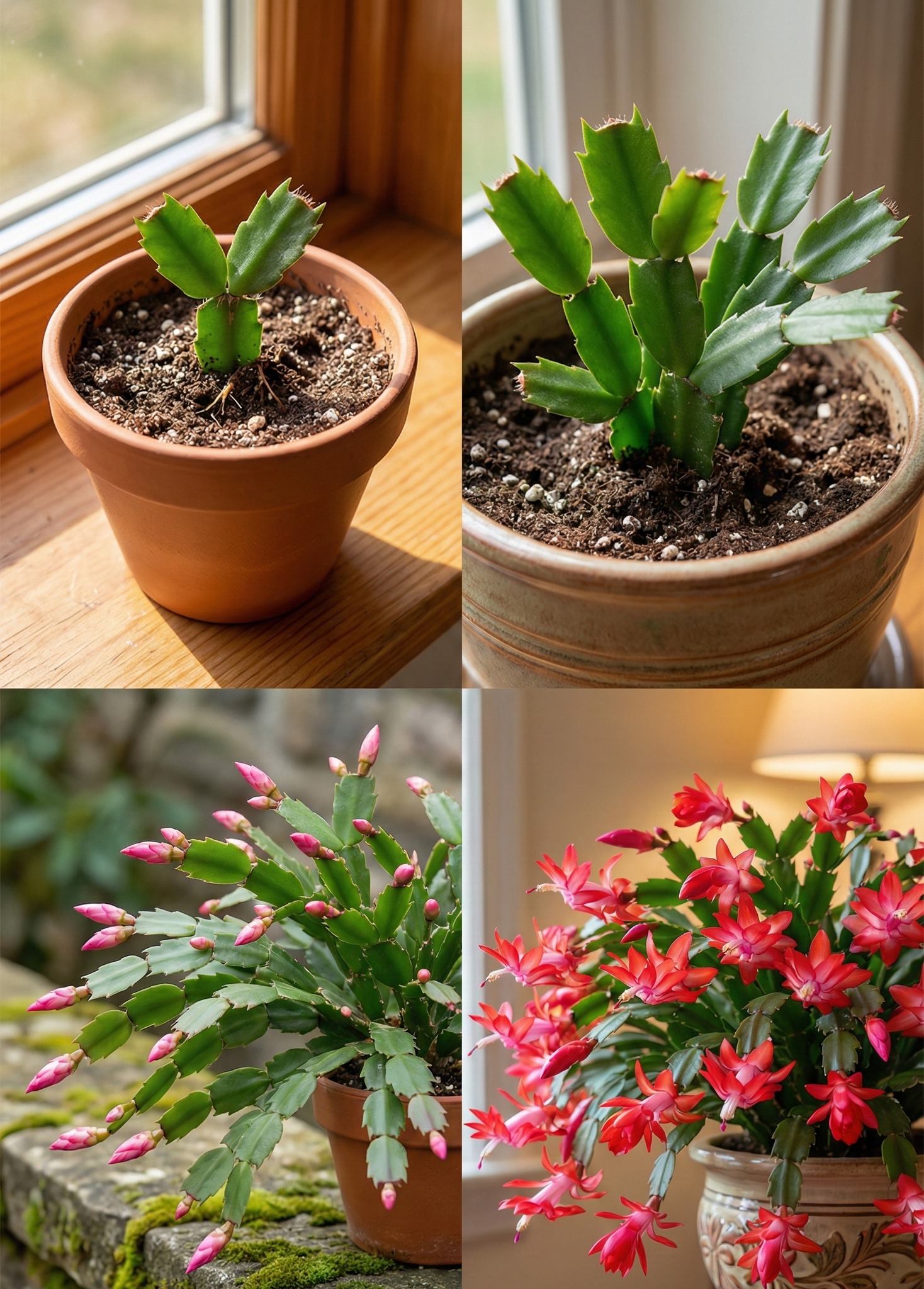
The Christmas Cactus, scientifically known as Schlumbergera, is a popular and beautiful houseplant cherished for its vibrant blooms during the holiday season. Also called Santa Teresita or Forest Cactus, this unique plant stands out from traditional desert cacti due to its tropical origins and care requirements. With the right attention, your Christmas Cactus can bloom spectacularly year after year and remain a stunning addition to your indoor garden.
Origin and Characteristics
Unlike desert cacti, the Christmas Cactus is native to the tropical rainforests of Brazil, where it grows as an epiphyte on trees, thriving in humid, shaded environments. It has flat, segmented stems that resemble leaves and produces striking, tubular flowers in shades of red, pink, white, or purple.
Light Requirements
The Christmas Cactus prefers bright but indirect light. Direct sunlight can scorch its delicate stems and cause discoloration, so it’s best to place it near a window with filtered light or in a bright room away from harsh sun rays.
During winter months, when natural light is reduced, you can place the plant closer to a bright window to encourage blooming. However, avoid sudden changes in lighting, as the plant prefers gradual adjustments.
Watering Guidelines
Watering is one of the most crucial aspects of Christmas Cactus care. This plant likes its soil to be consistently moist but not soggy.
Watering frequency: Water thoroughly when the top inch of soil feels dry. During active growth and blooming (spring through early winter), increase watering slightly.
Avoid waterlogging: Ensure the pot has good drainage to prevent root rot, which can easily affect this plant.
Humidity: The Christmas Cactus enjoys higher humidity levels compared to desert cacti. Mist the plant occasionally or place it near a humidity tray to maintain moisture in the air.
Temperature Preferences
Ideal temperatures for the Christmas Cactus range between 60°F and 70°F (15°C to 21°C). Avoid exposing the plant to temperatures below 50°F (10°C) or sudden cold drafts, as these can stress the plant and inhibit blooming.
At night, slightly cooler temperatures encourage bud formation. Therefore, placing the plant in a cooler room during the fall can help trigger flowering.
Soil and Potting
Use a well-draining potting mix designed for epiphytic plants or cacti. A mix of regular potting soil combined with perlite or orchid bark improves drainage and aeration, preventing root issues.
Repot your Christmas Cactus every two to three years, preferably after flowering ends, to refresh the soil and give roots more room to grow.
Fertilization
Feed your Christmas Cactus with a balanced, water-soluble fertilizer diluted to half strength every two to four weeks during the growing season (spring and summer). A fertilizer with equal parts nitrogen, phosphorus, and potassium works well.
Avoid fertilizing during the fall and winter months when the plant is preparing to bloom or is dormant.
Encouraging Blooming
NEXT PAGE
ADVERTISEMENT

